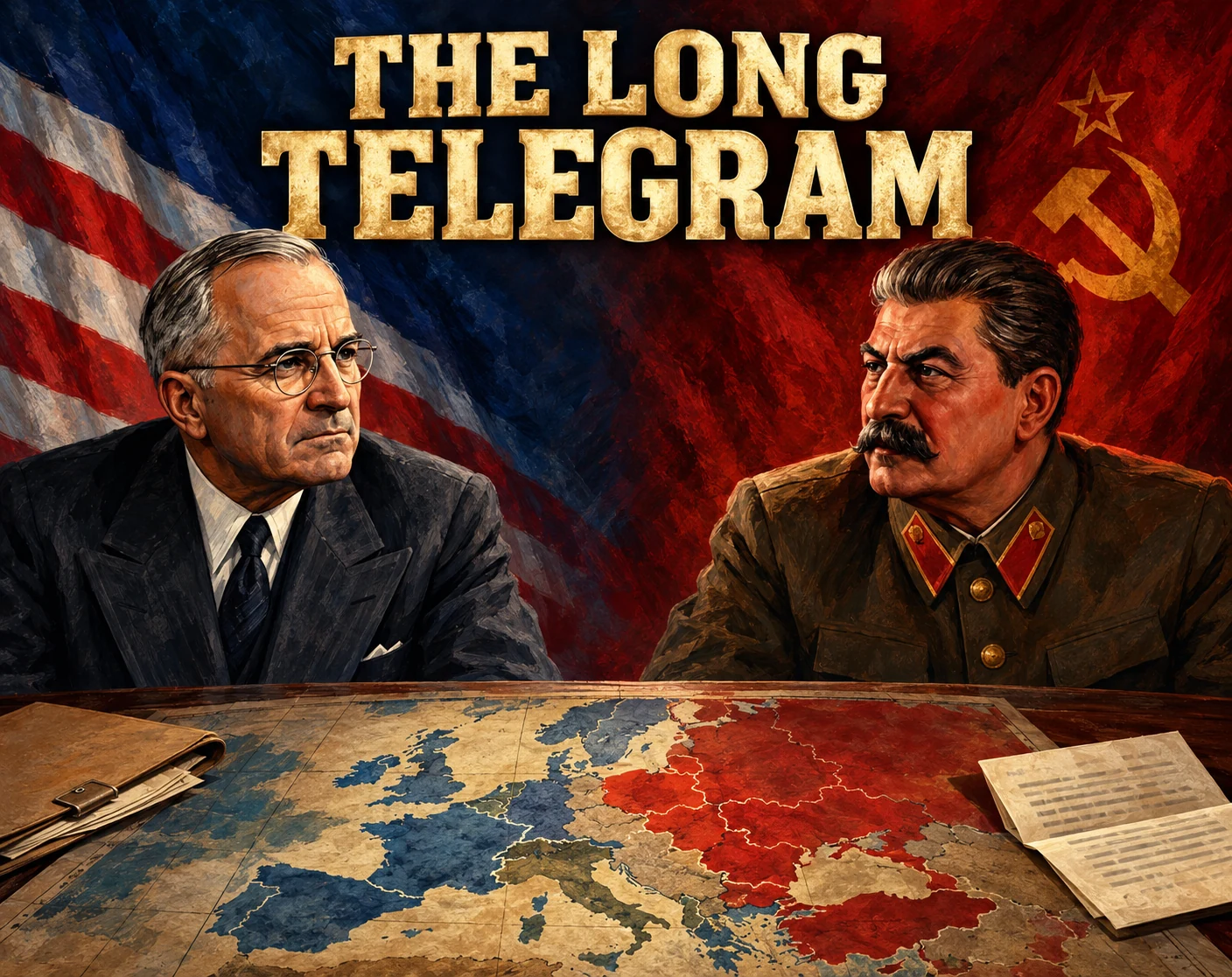
The Long Telegram
Turn-based Cold War strategy, in development. Balance of Terror, Chapter I
Spring, 1946. The war is over. The peace is already in trouble.
A turn-based Cold War strategy game about gaining influence abroad while keeping enough power at home to act. Lead Washington or Moscow from a desk full of cables, competing advice and decisions you cannot postpone.
Coming soon for Windows and macOS. There’s no demo or download yet.
You cannot do everything
An ally wants aid. A strike threatens reconstruction. Your advisers have different answers, and your intelligence leaves room for doubt. You have enough power to do something. You cannot do everything.
Every move abroad has a cost. Every promise at home has someone waiting to collect.
Commit your orders, read the dispatches and face the political consequences.
Official trailer
Fifty-two seconds from Washington and Moscow, 1946.
At the desk
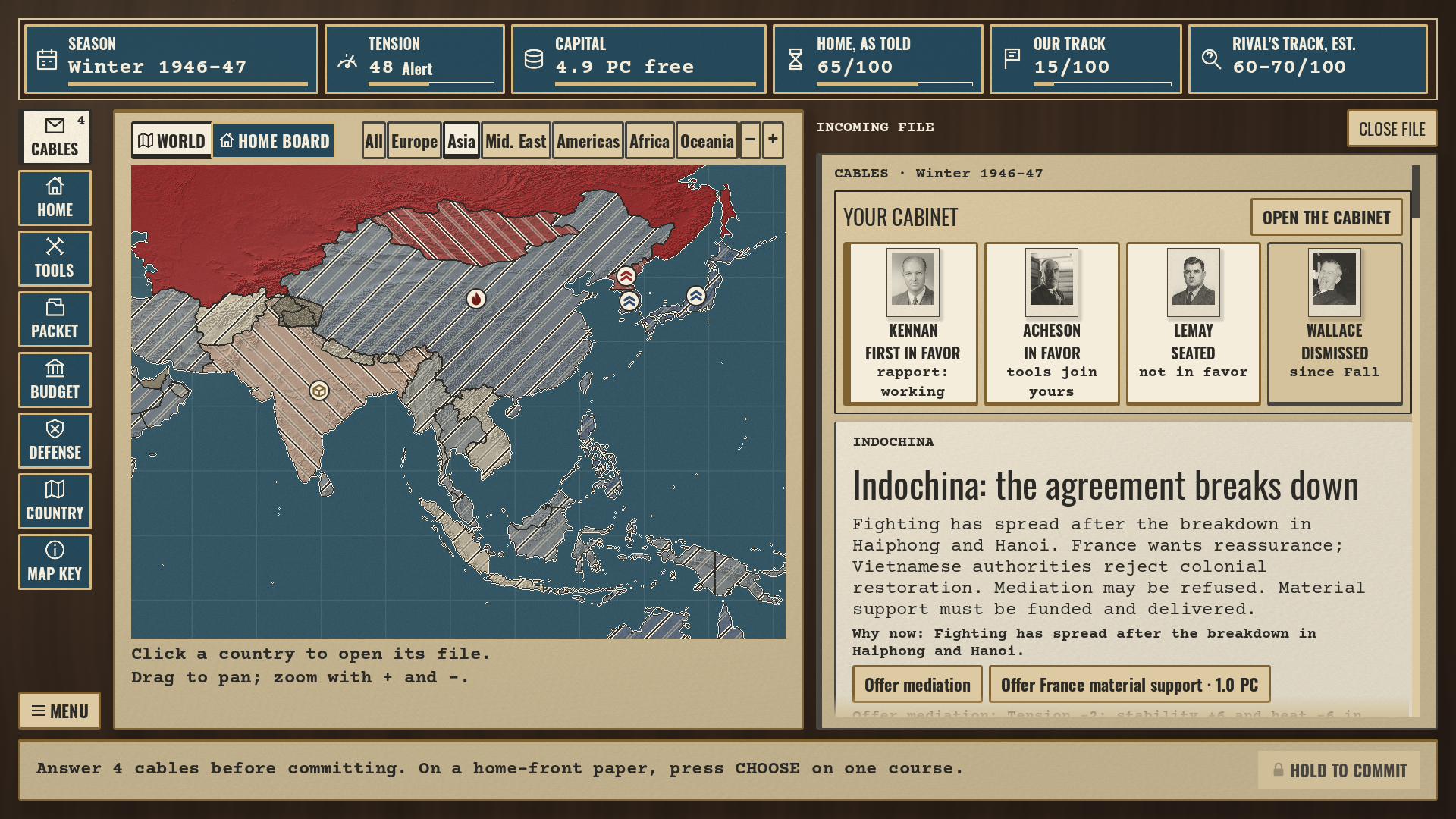
Screenshots from the current development build.
 View full size
In the current development build
- Truman’s or Stalin’s chair
- Play through the four seasons of 1946, confronting foreign crises and domestic dilemmas while protecting your position.
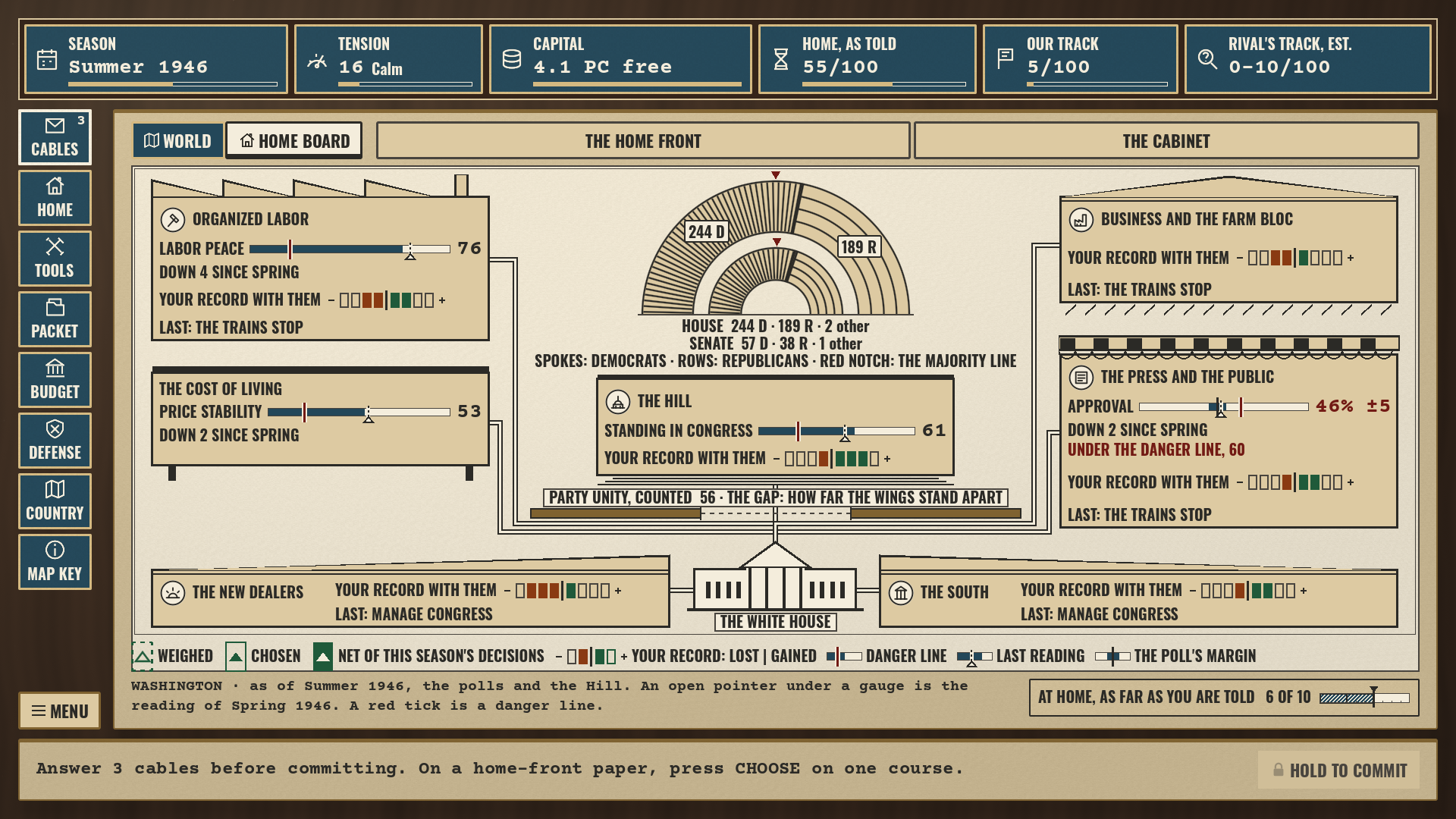
- Two different home fronts
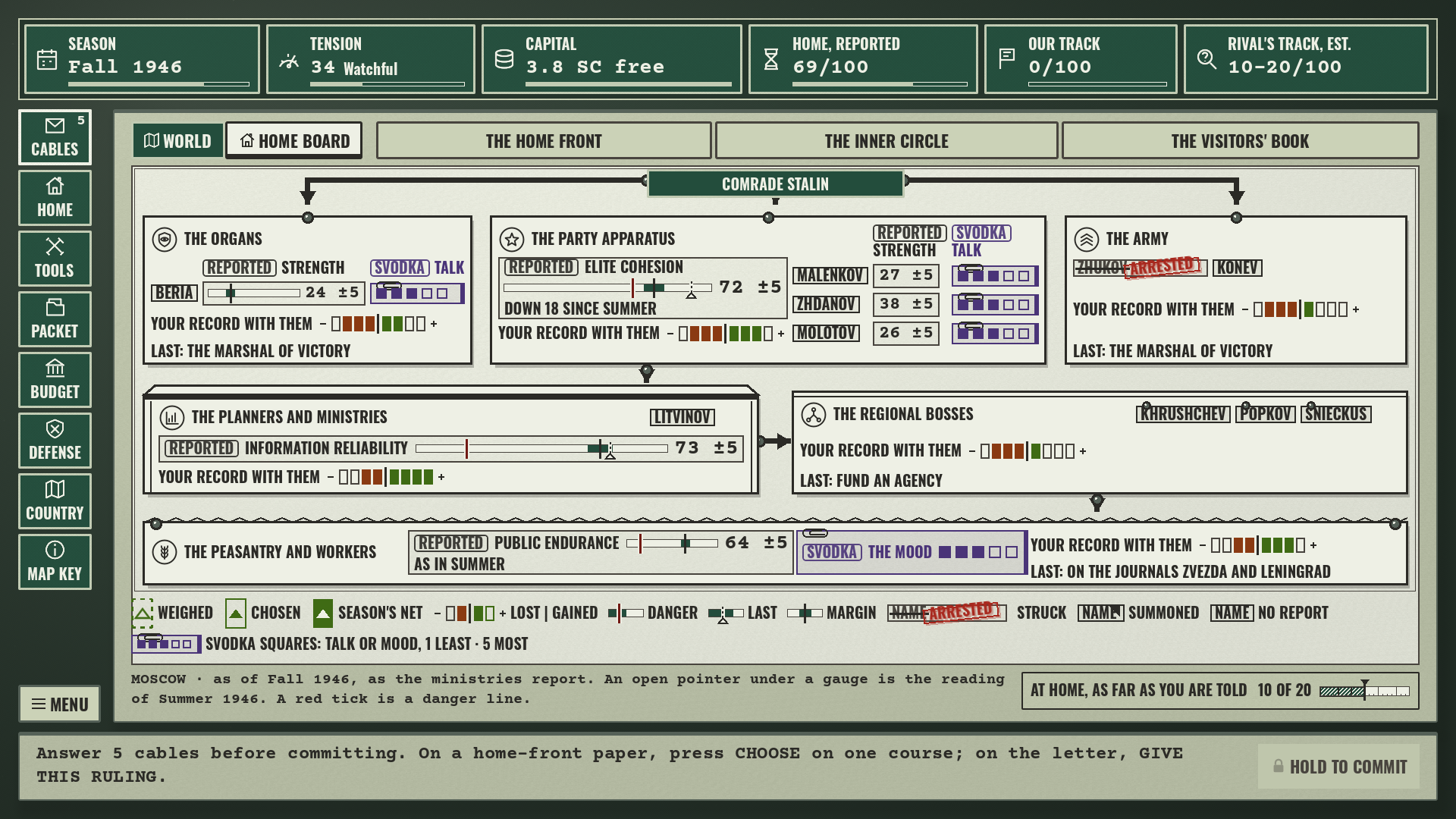
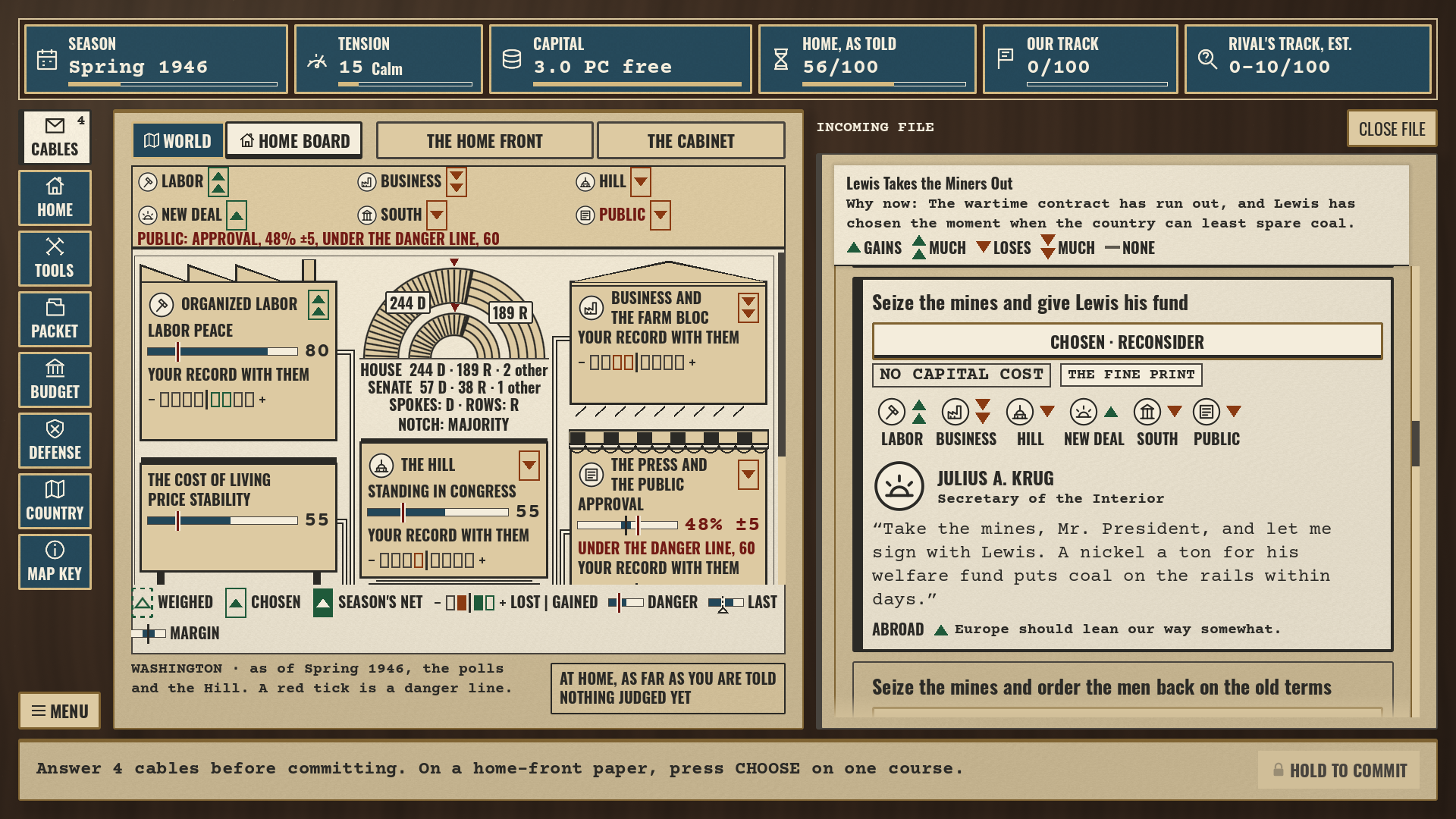
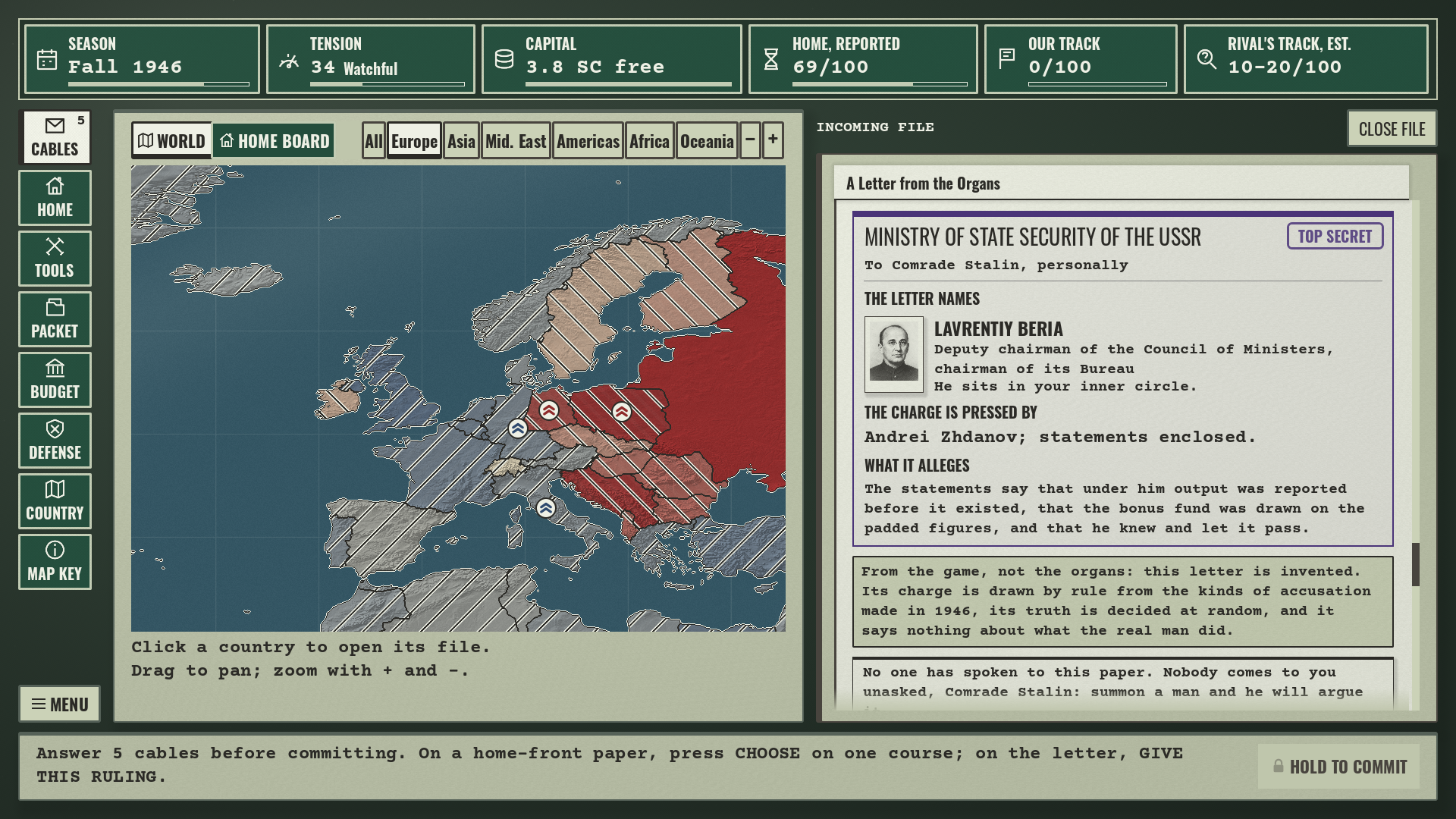
- In Washington, face Congress, organized labor, business and public opinion. In Moscow, navigate the party, the army, rival power centers and ministries whose reports may conceal as much as they reveal.
- Eight advisers, eight visions
- The broader campaign features historical advisers with different doctrines, priorities and definitions of success. Decide whose judgment deserves your confidence.
- Intelligence you have to judge
- Weigh uncertain reports before committing scarce resources. Watch the political map change and read the dispatches explaining what your decisions set in motion.
Two capitals. Different pressures.
 View full size
 View full size
 View full size
 View full size
Work ahead
The expanded leader, cabinet and home-front experience currently covers 1946. Extending those systems through the later campaign years until 1952 is part of development.
- A deeper intelligence and advice contest
- Uncover the rival’s aims through estimates and intercepts, and hear advisers argue their case across foreign policy, budgets, defense and trade.
- More ways to govern
- Truman’s legislative program, Stalin’s plans and appointments, and cabinet pressures and domestic dilemmas carried into later years.
- Expanded warfare
- Limited war and World War III, with continuing play through their military and political consequences.
This is the Godot rebuild of the original browser edition. Release timing and the final feature set are still to be announced.